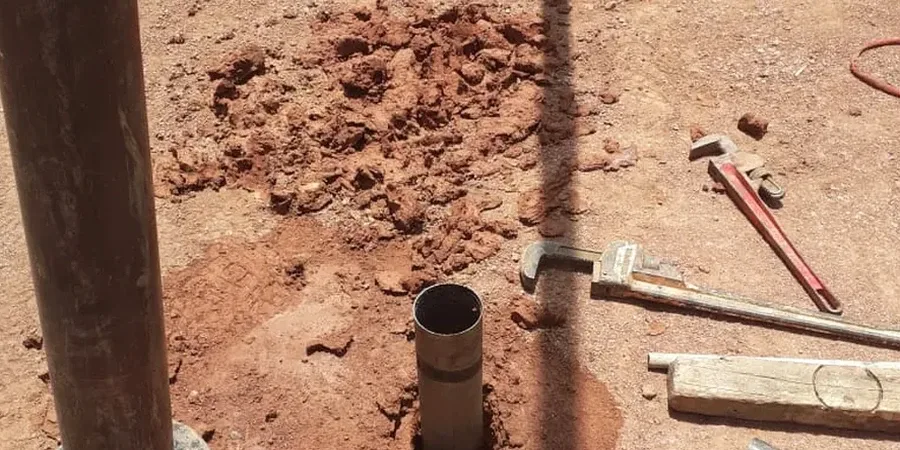
Moreno Valley sits at roughly 1,600 feet above sea level, carved into the arid landscape of western Riverside County where urban growth has pushed well beyond the old boundaries of March Air Reserve Base. The city’s population surged past 200,000 over the last two decades, and with that came a wave of commercial pads, warehouse logistics centers, and residential subdivisions—all of which put the local groundwater and percolation rates under a microscope. Runoff management here is no afterthought. The combination of compacted alluvial soils and seasonal storm pulses means that a field permeability test (Lefranc/Lugeon) is often the deciding factor between a detention basin that works and one that fails during the first winter storm. For projects near the Box Springs foothills or out toward the 60/215 interchange, we rely on in-situ testing to move beyond guesswork on infiltration rates. Complementing this with a CPT test helps delineate the stratigraphy before selecting the depth intervals for permeability assessment.
A reliable k-value from an in-situ test can cut stormwater infrastructure costs by 15-20% compared to conservative textbook estimates.
Local ground factors
A 350,000-square-foot logistics warehouse off Heacock Street taught us a lesson that gets repeated across the Inland Empire. The geotech report had assumed a blanket infiltration rate of 0.5 inches per hour based on a regional soil survey, but the stormwater basin was sited directly over a buried clay lens. During a 25-year storm event, the basin overflowed, sending sediment-laden water onto the adjacent property. That triggered a stop-work order and a costly retrofit with an underdrain system. Performing a field permeability test (Lefranc/Lugeon) at the exact basin footprint would have revealed the low-conductivity layer during design. Groundwater mounding under recharge basins is another risk we see often in Moreno Valley when the subsurface is heterogeneous. Without in-situ k-values, the mounding analysis is essentially a guess—and guesswork doesn't hold up when the regional water board asks for supporting calculations.
Common questions
What is the typical cost of a field permeability test (Lefranc/Lugeon) in Moreno Valley?
Budget for US$660 to US$990 per test zone, which includes the drill rig setup, packer or screen installation, test execution, and the engineering report. The exact cost depends on depth, access, and whether we're running Lefranc in soil or Lugeon in rock. Multiple intervals at the same borehole reduce the per-test cost.
When is a Lugeon test required instead of a Lefranc test?
A Lugeon test applies when the bedrock is fractured or weathered and you need to quantify the hydraulic conductivity of the rock mass under pressure. It's standard for dam foundations, tunnel alignments, and deep shafts. In Moreno Valley, we commonly use Lugeon testing where the Box Springs metasedimentary rocks are encountered at depth, while Lefranc is sufficient for the overlying alluvial soils.
How long does a field permeability test take to complete in the field?
A single Lefranc test interval typically runs 45 to 90 minutes once the borehole is prepared and the water level has stabilized. A Lugeon test with five pressure steps takes about 60 to 90 minutes per interval. Most projects in Moreno Valley complete all permeability testing within one or two field days, depending on the number of zones and the drilling conditions.