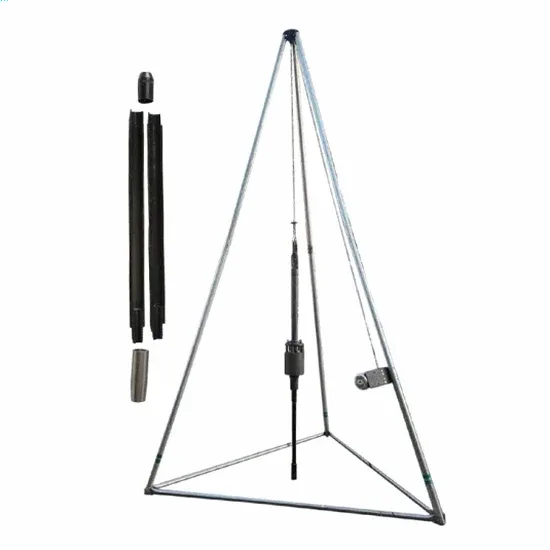
Last year we mobilized to a warehouse project off Perris Boulevard where the structural engineer was convinced the native soil would handle 3,000 psf without breaking a sweat. Three SPT borings later, we hit loose alluvium at 12 feet with N-values barely hitting 6 blows. The architect had to redesign the entire foundation system. Moreno Valley sits on a complex patchwork of young alluvial deposits washed down from the Box Springs and San Jacinto Mountains, and blow counts can swing from refusal in cemented hardpan to single-digit readings across one site. When you're dealing with a city that averages 1,700 feet elevation and sits in a seismically active basin, skipping liquefaction assessment during SPT data collection is asking for trouble on the back end. We run the split-spoon sampler per ASTM D1586 with an automatic trip hammer that delivers consistent 140-pound drops, because manual rope-and-cathead rigs introduce scatter that makes the geotech report borderline useless for any serious foundation design.
An N-value without soil classification is just a number. The split-spoon tells you how hard you hit it, not what you hit.
Local ground factors
Moreno Valley sits in a high seismic hazard zone where the San Jacinto Fault runs roughly 8 miles northeast of the city center. The basin fill deposits that underlie most commercial development areas include Holocene alluvium that reaches groundwater at depths as shallow as 30 feet in some parcels near the 60/215 interchange, creating liquefaction-prone conditions in saturated silty sands. The 2019 Ridgecrest sequence didn't rupture here directly but reminded every structural engineer in the Inland Empire that long-period ground motion travels through these basin sediments without losing much energy. SPT blow counts below 15 in saturated granular layers below the water table are a red flag that triggers mandatory fines content testing and liquefaction triggering analysis per Idriss and Boulanger methodology. The city's building department reviews geotech reports against the 2022 California Building Code, and they expect N60 values corrected for overburden pressure, hammer energy, and rod length, not raw field numbers that make borderline soil look competent. Skipping the corrections or failing to measure groundwater during drilling produces a report that might pass plan check but won't hold up when the first tilt-up panel goes up on a mat foundation that should have been piles.
Relevant standards
ASTM D1586 Standard Test Method for Standard Penetration Test, ASTM D2487 Unified Soil Classification System (USCS), ASTM D4633 Energy Measurement for SPT Hammers, 2022 California Building Code Chapter 18 (Soils and Foundations), IBC Section 1803 Geotechnical Investigations, ASCE 7-22 Minimum Design Loads
Common questions
How much does an SPT boring cost in Moreno Valley?
Standard penetration test borings in Moreno Valley typically run between US$570 and US$680 per boring for depths up to 30 feet, assuming reasonable access and no major obstructions. Deeper borings, sites requiring mud rotary drilling, or projects with multiple mobilization locations will adjust that range. The per-foot cost beyond 30 feet generally falls between US$18 and US$24 per foot depending on the subsurface conditions and the drilling method required.
How many SPT borings does the City of Moreno Valley require?
Moreno Valley follows the 2022 California Building Code which ties the minimum number of borings to the building footprint and the site's geological complexity. A typical single-story commercial building on a flat lot might require two to three borings, while a larger tilt-up warehouse or multi-story structure often needs four to six borings spaced at 50 to 100 feet on center. Sites with known liquefaction potential or historic fill will trigger additional borings at the plan checker's discretion.
What's the difference between N-value and N60?
The raw N-value is the blow count recorded in the field without any corrections applied. N60 normalizes that number to 60% of the theoretical hammer energy because different SPT hammer systems deliver anywhere from 40% to 95% of the standard energy. In Moreno Valley where we use calibrated automatic hammers with measured energy ratios, N60 gives structural engineers a consistent value they can plug into settlement equations and bearing capacity formulas without wondering whether the driller's cathead technique skewed the numbers.
Can SPT testing tell me if my Moreno Valley site has liquefaction risk?
Yes, SPT data is the primary input for liquefaction triggering analysis when combined with groundwater depth measurements and laboratory fines content testing. Low blow counts in saturated sands below the water table are the first indicator, and we apply the Idriss-Boulanger simplified procedure to calculate the factor of safety against liquefaction for each soil layer. Sites in the basin area near the 60 freeway have historically shown liquefiable layers between 15 and 35 feet where N-values drop into the single digits.
How soon can you mobilize a drill rig to Moreno Valley?
Our typical mobilization window for Moreno Valley projects is 3 to 5 business days from signed proposal, assuming standard traffic conditions on the 215 and 60 corridors. Rush mobilizations within 48 hours are available for projects with tight closing deadlines, though the scheduling depends on the current drill rig calendar. Larger projects requiring multiple borings or specialized access equipment may need 7 to 10 days for full logistics coordination.