ASCE 7 and IBC Chapter 18 set the baseline for subsurface exploration here, but in Moreno Valley the alluvial fan deposits that blanket the Perris Valley floor demand a more focused approach. The city sits at roughly 1,600 feet elevation, with groundwater levels that fluctuate seasonally and complicate tunnel face stability in silty sands. We run ASTM D1586 SPT borings and ASTM D2487 classification on every project before a single tunnel alignment gets locked in. For deeper soft zones near the Badlands, we often pair SPT data with CPT testing to capture continuous pore pressure profiles that standard split-spoon sampling misses. City of Moreno Valley public works reviews require clear documentation of bearing capacity, settlement potential, and dewatering needs—we structure every report to move smoothly through that review cycle.
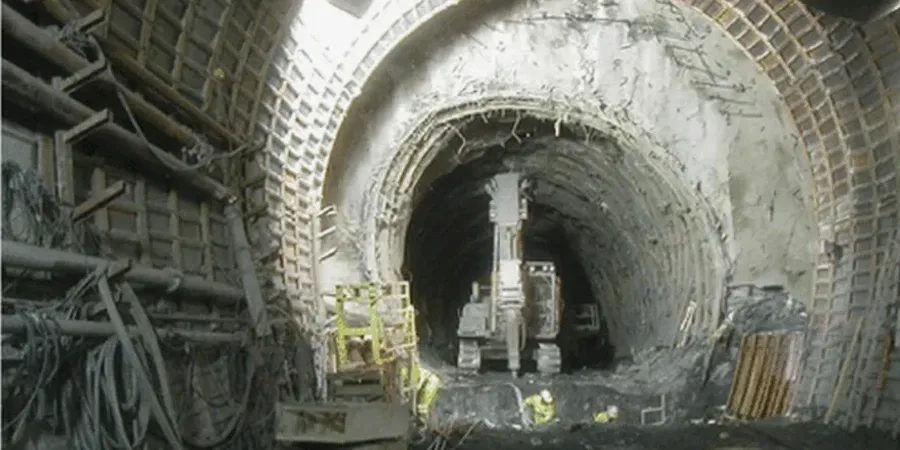
Tunnel face stability in Moreno Valley depends less on the soft soil itself and more on accurately mapping the perched groundwater lenses that saturate the silty matrix.
Common questions
What is the typical cost range for a soft-soil tunnel geotechnical study in Moreno Valley?
Budget between US$3,850 for a short pedestrian tunnel alignment with limited borings and basic lab work, up to US$17,300 for a multi-borehole campaign with triaxial testing, piezometer installation, and a full geotechnical baseline report for a roadway or utility tunnel.
Which ASTM standards govern the field drilling and lab testing for this type of project?
ASTM D1586 governs SPT procedures, ASTM D2487 covers soil classification, and ASTM D4767 addresses consolidated-undrained triaxial compression testing on cohesive soils. We also follow ASTM D1587 for Shelby tube sampling.
How do you handle groundwater in Moreno Valley alluvial soils during a tunnel investigation?
We install standpipe or vibrating-wire piezometers at depths matching the tunnel invert and monitor for a minimum of 30 days. The data defines the steady-state groundwater surface and helps us estimate dewatering rates and face pressure requirements for tunneling.
How long does a full geotechnical campaign take before report delivery?
Field drilling typically requires 3 to 7 working days depending on the number of boreholes and depth. Lab testing adds roughly two weeks for triaxial suites. You can expect the final signed report within four weeks of mobilization.