← Home · Investigation

Exploratory Test Pit Services in Moreno Valley

Together, we solve the challenges of tomorrow.

LEARN MORE →

Moreno Valley sits on a complex alluvial fan system where the Badlands to the northeast shed coarse debris onto the valley floor, creating highly variable subsurface profiles even within a single lot. We routinely encounter lenses of bouldery cobbles separated by fine sandy silts, a sequence that geophysical methods alone struggle to resolve. An exploratory test pit exposes these transitions visually, allowing our team to measure strata thickness directly and extract bulk samples from each layer. This approach proves especially useful on the city’s older graded pads, where historical fill placement records are often incomplete. When the pit reaches depths of six to ten feet, we typically coordinate with a CPT test to cross-check tip resistance data against the logged profile, ensuring no soft inclusion remains hidden between widely spaced borings.

A single test pit can resolve more stratigraphic detail than three borings when the subsurface alternates between hardpan and loose channel deposits.

Our approach and scope

Our methodology follows ASTM D1586 for sampling and ASTM D2487 for soil classification, aligned with the geotechnical investigation requirements of the 2022 California Building Code (CBC). In Moreno Valley, where summer temperatures regularly exceed 100°F and surface soils can dry to a hard crust, we schedule excavation during early morning hours to maintain sample moisture for accurate grain size analysis. Each pit is benched or sloped per Cal/OSHA excavation safety orders, and we install temporary shoring if the planned depth exceeds five feet. A field engineer logs the profile continuously, photographing each horizon before bagging samples in sealed containers. Clients receive a report that identifies the Unified Soil Classification of every layer, notes groundwater seepage if encountered, and provides direct measurements of soil stiffness that correlate well with subsequent laboratory compaction curves.
Exploratory Test Pit Services in Moreno Valley
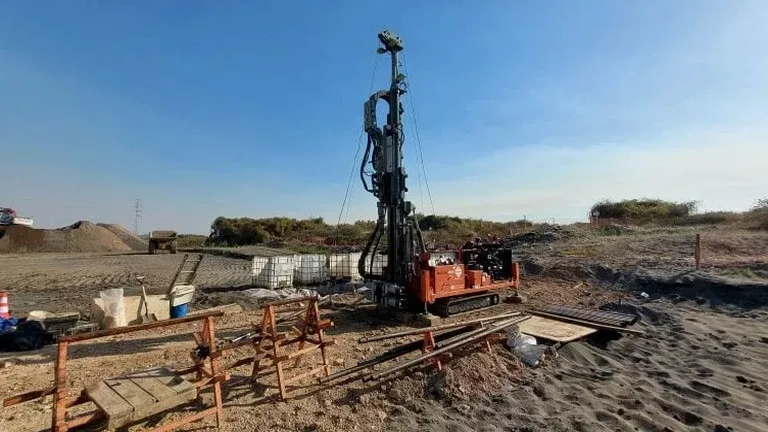
Technical reference image — Moreno Valley

Local ground factors

The San Jacinto fault zone passes less than ten miles from Moreno Valley’s eastern edge, making shallow shear wave velocity a critical design parameter for any structure assigned to Seismic Design Category D or E. Undocumented fill is common across older parcels north of the 60 freeway, where developers decades ago compacted loose alluvium without engineered moisture control. An exploratory test pit cut through such fill will often reveal organic debris, brick fragments, or irregular compaction planes that drastically reduce bearing capacity. Overlooking these anomalies leads to differential settlement that appears within the first rainy season. We also watch for perched groundwater perched on cemented hardpan layers—a condition that triggers sulfate attack on conventional concrete unless the mix design is adjusted early.

Need a geotechnical assessment?

Reply within 24h.

Email: info@geotechnicalengineering1.com

Video overview

Reference parameters

ParameterTypical value
Typical pit depth5 to 12 ft
Maximum reachable depth18 ft (with benching)
Standard width24 to 36 inches
Sample typeBulk disturbed / hand-carved block
Applicable standardASTM D1586 / ASTM D2487
ReportingUSCS log, photos, groundwater notes

Related services

01

Standard exploratory pit

Excavation to the planned footing depth plus two feet, with continuous logging and bulk sampling of each distinct layer. We measure density in-situ using the sand cone method when requested.

02

Deep investigation pit

Benched excavation reaching up to eighteen feet, intended for sites where a buried channel or paleosol is suspected based on nearby borings. The pit face is cleaned and mapped before sampling.

03

Combined pit and in-situ testing

We run a plate load test directly on the pit floor to obtain the modulus of subgrade reaction, or conduct infiltration testing when a stormwater basin is planned.

Applicable standards

ASTM D1586 (Standard Test Method for Penetration Test and Split-Barrel Sampling of Soils), ASTM D2487 (Standard Practice for Classification of Soils for Engineering Purposes), 2022 California Building Code (CBC), Chapter 18, Cal/OSHA Title 8, Subchapter 4 (Excavation Safety), ASCE 7-22 (Minimum Design Loads for Buildings)

Common questions

How much does an exploratory test pit cost in Moreno Valley?

A standard test pit up to ten feet deep in accessible ground typically falls between US$440 and US$940. The final cost depends on depth, soil hardness, shoring requirements, and the number of samples collected. Sites with heavy cobbles or tight backyard access may require a smaller machine and additional labor, which influences the total.

Do I need a permit from the City of Moreno Valley to dig a test pit?

In most cases, private property test pits for geotechnical investigation do not require a grading permit, provided the excavation is backfilled the same day. However, if the pit exceeds five feet in depth, Cal/OSHA safety measures apply, and we must notify the regional underground service alert (USA North 811) at least two working days before digging.

What information does a test pit provide that a boring cannot?

A pit exposes a continuous vertical face, which reveals thin seams, cobble alignments, and fill boundaries that a split-spoon sample can easily miss. You see the actual contact between natural ground and artificial fill, measure fracture spacing in weathered rock, and extract large undisturbed blocks for strength testing. It is the only excavation method that gives you both visual confirmation and bulk samples from the same location.
Location and service area

We serve projects in Moreno Valley and surrounding areas.

View larger map